10 Proven Ways to Generate Leads and Win More Clients
Ten proven, data-backed lead generation strategies, from content and email to paid ads and follow-up, and how to turn each one into paying clients.
On this page
Key Takeaways
- 80% of new leads never translate into a sale, according to Invesp, which means generating a lead is only the first of several steps a business has to get right.
- Nurtured leads make 47% larger purchases than non-nurtured leads, and companies that excel at nurturing generate 50% more sales-ready leads at a 33% lower cost, per the same Invesp research.
- Content marketing generates roughly 3x more leads than outbound channels at 62% lower cost per lead ($92 / £69 versus $242 / £182 for paid search), based on Digital Applied's 2026 benchmarks.
- Email marketing returns $36 to $40 (£27 to £30) for every dollar spent on average, according to data aggregated by Demandsage, citing HubSpot, Omnisend, and Statista.
- Retargeting campaigns convert at roughly 2.5x the rate of standard prospecting campaigns (3.8% versus 1.5%), per Demandsage's retargeting data, because the audience already knows the brand.
Every business eventually hits the same wall: there's no shortage of ideas for attracting attention, but attention alone doesn't pay the bills.
Lead generation is the process of attracting strangers and prospects and converting them into people who've shown real interest in what a business offers. Done well, it builds a pipeline that sustains growth. Done poorly, or done without a plan for what happens after the lead arrives, it produces a list of names that never turns into revenue.
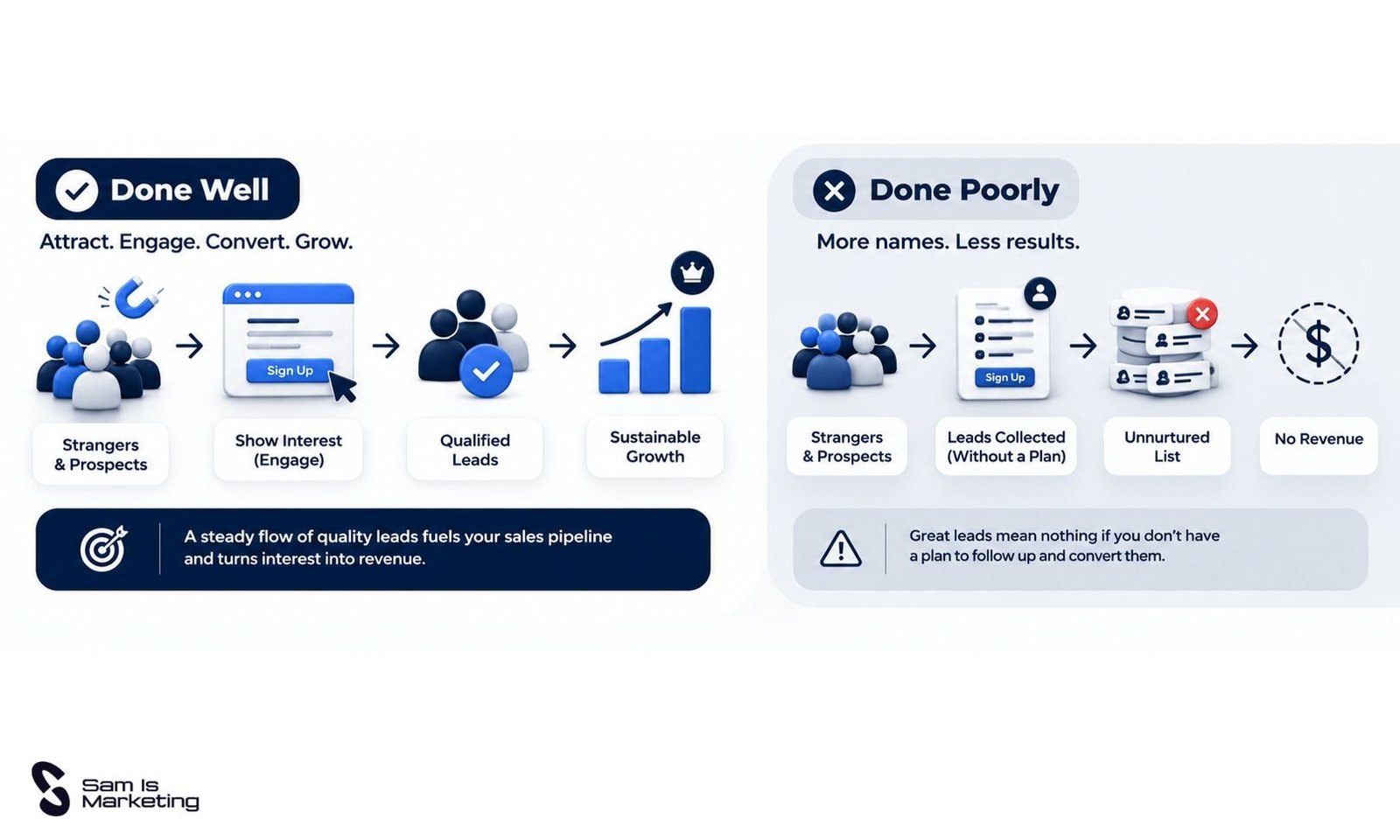
That second scenario is far more common than most businesses realise. The bottleneck usually isn't the number of leads coming in. It's everything that happens to them afterward: whether they're qualified properly, whether they're nurtured with the right content, and whether follow-up actually happens on a schedule instead of once and never again.
Here are ten strategies that address both halves of the problem: generating leads in the first place, and turning a meaningfully larger share of them into paying clients.
1. Start With a Value Proposition That Actually Differentiates
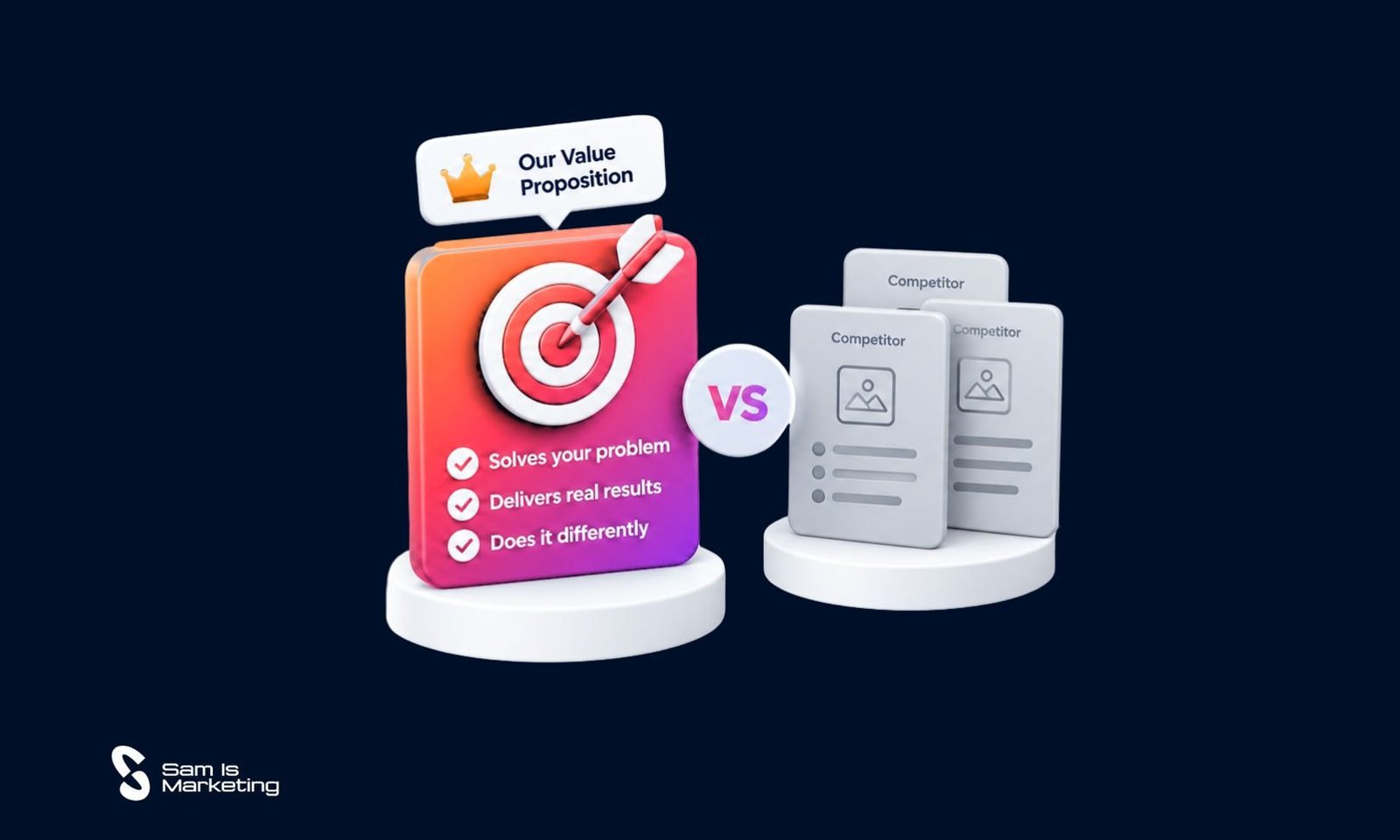
Before any tactic works, prospects need a clear reason to choose one business over its competitors. A value proposition is a plain statement of how a product or service solves a specific problem, delivers a specific benefit, and does it differently from the alternatives.
Vague positioning (“we deliver quality service”) does nothing to differentiate. A stronger value proposition names the exact pain point it solves and the exact outcome it produces, in language the target audience would use themselves. It should show up consistently everywhere a prospect might encounter the brand: the website, social profiles, ad copy, and every piece of sales material.
2. Qualify Leads Before You Chase Them
Not every lead deserves equal attention, and treating them as if they do is one of the fastest ways to burn out a sales team on the wrong prospects.
Lead qualification sorts prospects by their actual likelihood of becoming a paying client, typically using a mix of demographic, firmographic, and behavioural signals. A lead scoring system assigns points to specific actions. Someone who visits a pricing page and downloads a proposal template is a stronger signal than someone who only opened one newsletter, and ranks prospects accordingly.
AI can make this process faster and more consistent. It can connect with lead sources and marketing platforms such as Meta Lead Ads, Google Ads, LinkedIn Lead Gen Forms, HubSpot, GoHighLevel, Zapier, and Make to capture and analyse lead data as enquiries come in. AI can then evaluate information such as the lead's service interest, company details, engagement, enquiry responses, and previous interactions to help determine whether the prospect is ready for sales follow-up.

For example, an AI-powered workflow could receive a lead from a Meta campaign, enrich the available information, ask qualifying questions through SMS or chat, assign a qualification score, and automatically route high-intent prospects to a salesperson while placing less-qualified leads into an appropriate nurture sequence. This means your team can spend more time speaking with prospects who have demonstrated genuine buying intent. This matters because 80% of new leads never convert. Qualification doesn't fix that number on its own, but it stops a sales team from spending equal effort on a lead worth pursuing and one that never will be.
3. Use Content Marketing to Attract, Not Just to Fill a Calendar
Content marketing works because it does two things at once: it attracts organic search traffic, and it builds enough trust that a prospect is willing to hand over contact details before ever speaking to a salesperson.
The cost advantage is significant. Content marketing produces leads at roughly $92 (£69) each on average, compared to $242 (£182) for paid search in B2B, according to Digital Applied's research, a 62% lower cost per lead. Organic traffic also converts at close to 2.8 times the rate of paid traffic, because a visitor who found an answer to their own question arrives with more trust already built than one who clicked an ad.
The content itself should map to where a prospect actually is: awareness-stage blog posts and guides for people who don't yet know they need help, case studies and comparison pieces for people evaluating options, and product-specific pages for people close to a decision.
4. Meet Prospects on the Social Platforms They Actually Use
Social platforms remain one of the most direct ways to put a brand in front of a specific audience, but the return depends entirely on choosing the right platform rather than posting everywhere at once.
The right approach starts with identifying where the target audience actually spends time, then building a content mix of educational posts, proof points, and genuine engagement rather than pure promotion. Paid social advertising adds precision on top of that, letting a business target by role, industry, or behaviour rather than relying on organic reach alone.
5. Build an Email List and Actually Use It
Email marketing remains one of the highest-return channels available, returning $36 to $40 (£27 to £30) for every dollar spent on average, and closer to $42 (£32) for marketing and advertising agencies specifically, according to aggregated data from HubSpot, Omnisend, and Statista.
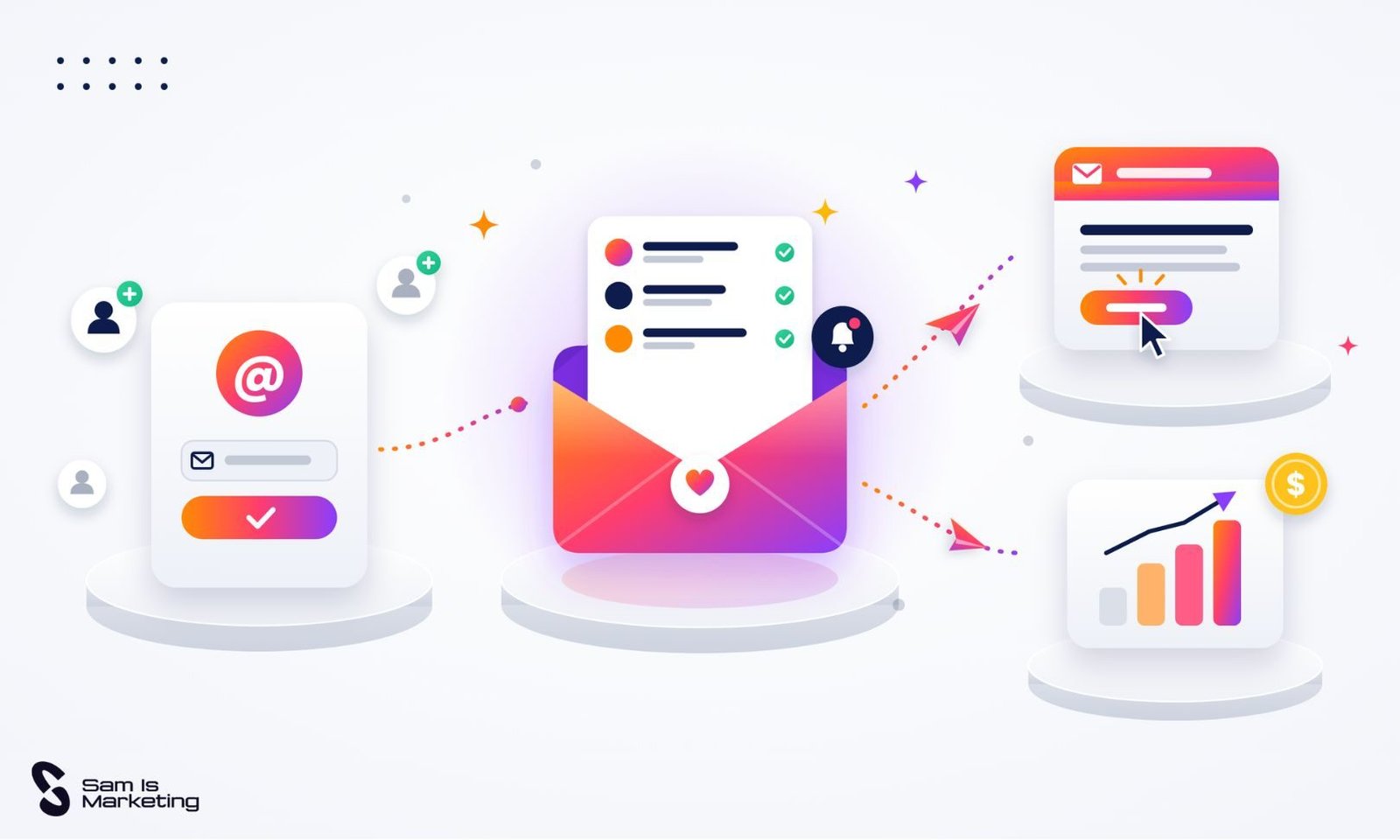
The return depends on two things most businesses get only half right: a growing list built from genuine lead magnets (guides, checklists, free assessments) placed where prospects will actually see them, and segmentation once that list exists. A subscriber who downloaded a pricing guide should receive different follow-up than one who signed up for a general newsletter. Automation tools make this practical without manual list management for every send.
6. Treat Networking as Pipeline Building, Not Just Socialising
Referrals and relationships still drive a disproportionate share of new business, particularly for service-based companies where trust is the product. Building genuine relationships with industry peers, partners, and past clients compounds over time in a way that a single ad campaign never does.
This works both offline (conferences, trade shows, industry events) and online (LinkedIn, industry forums, niche communities), and it works best when it's treated as an ongoing practice rather than something to activate only when new business is urgently needed.
7. Use Paid Advertising for Speed, Not Just Volume
Paid advertising earns its place when a business needs to reach a specific audience quickly rather than waiting for organic traffic to build. Google Ads, Meta Ads, and LinkedIn Ads all let a business target by keyword, demographic, or job function with a level of precision organic reach can't match.
The leverage comes from tight targeting rather than broad reach. A campaign built around detailed buyer personas and researched keywords consistently outperforms one aimed at a generic audience, and it's worth treating ad copy and creative with the same rigour as any other conversion asset, since a well-targeted campaign with weak creative still underperforms.
8. Re-Engage the Visitors Who Didn't Convert the First Time
Most visitors don't convert on their first visit to a website, and most businesses do nothing about it. Retargeting campaigns close that gap by keeping the brand visible to people who've already shown interest.
The numbers make the case clearly: retargeting campaigns convert at a median of 3.8%, compared to 1.5% for standard prospecting campaigns, and retargeted consumers show a roughly 400% increase in ad engagement compared to a cold audience, per Demandsage's data. This is one of the highest-leverage tactics available precisely because the audience already exists; it doesn't require a new acquisition budget, only a structured way to stay in front of people who've already raised their hand once.
9. Follow Up Like It's Part of the Product, Not an Afterthought
A single acknowledgement message is not a follow-up strategy, and this is where most lead generation effort quietly goes to waste. Nurtured leads make 47% larger purchases than non-nurtured ones, and businesses that excel at nurturing generate 50% more sales-ready leads at a 33% lower cost, according to Invesp's research.
Effective follow-up combines channels rather than relying on one: automated email sequences triggered by specific actions, a phone call for a more personal touch at the right moment, and social engagement that keeps the relationship warm between touches. The through-line across all of it is timing and relevance. A follow-up that ignores what the prospect actually did (downloaded a specific guide, visited a specific page) reads as generic, and generic follow-up gets ignored.
10. Measure What's Actually Working, Then Do More of It
None of the above matters much without a feedback loop. Lead generation without measurement is guesswork dressed up as strategy.
The essentials are a small set of KPIs, tracked consistently: leads generated, cost per lead, conversion rate by channel, and return on investment. A/B testing then sharpens each individual asset. Two versions of a landing page headline, two subject lines, two ad creatives, tested against each other rather than assumed. Small, consistent testing compounds over a year in a way that occasional large redesigns rarely do.
FAQ
- How many leads actually turn into clients?
- Roughly 20% on average, since Invesp's research finds that 80% of new leads never translate into a sale. That gap is exactly why qualification and nurturing matter as much as generation itself.
- What's the most cost-effective way to generate leads?
- Content marketing typically produces leads at the lowest cost per lead among the major channels, around $92 (£69) in B2B versus $242 (£182) for paid search, though it takes longer to build momentum than paid channels do.
- Is email marketing still worth it?
- Yes. It remains one of the highest-ROI channels available, averaging $36 to $40 (£27 to £30) returned for every dollar spent, provided the list is built from genuine opt-ins and segmented rather than blasted as one generic message.
- How long should a lead nurturing sequence run?
- There's no fixed number, but the sequence should continue until the prospect converts, replies, or explicitly opts out, rather than stopping after a single follow-up message. Persistence within reason consistently recovers leads that looked dead.
Generating Leads Is the Easy Half
The businesses that grow consistently aren't necessarily the ones generating the most leads. They're the ones that qualify properly, nurture consistently, and measure what's actually converting rather than what merely feels productive.
If your business is generating leads but struggling to turn them into clients, the gap is rarely the top of the funnel.
Get in touch with Sam Is Marketing to build a lead generation and follow-up system that's measured at every stage, not just at the point a lead first arrives.